
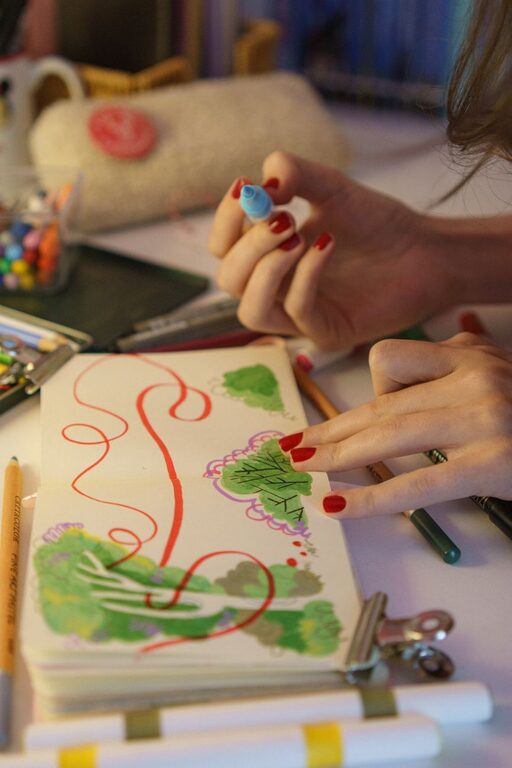
Creativity is not limited to artists, writers, or designers. It is a useful way of thinking that can help anyone solve problems, explore ideas, and enjoy everyday life more fully. The good news is that creativity does not require long hours, expensive tools, or special training. Small daily practices can make a meaningful difference.
The key is to create regular opportunities to notice, experiment, and make something. Even a few minutes can help you build confidence and develop a more curious mindset.
Start with Small Creative Habits
A creative routine does not need to be complicated. In fact, simple activities are often easier to maintain. Choose one habit that feels enjoyable and easy to repeat.
Try starting with:
– Writing for five minutes each morning
– Sketching an object near you
– Taking a different route during a walk
– Photographing interesting details
– Rearranging a small space
– Listening to a new type of music
– Collecting ideas in a notebook
The goal is not to create something perfect. The goal is to practice paying attention and responding to your ideas. Over time, small actions can become a natural part of your day.
Keep an Idea Notebook
An idea notebook gives your thoughts a place to land. You can use a paper notebook, a notes app, or any tool that is convenient. Keep it nearby so you can record ideas before they disappear.
Your entries might include:
– Questions you want to explore
– Interesting phrases or observations
– Possible projects
– Memories
– Problems you would like to solve
– New combinations of familiar ideas
– Things you noticed during the day
Do not worry about organizing everything immediately. A messy collection of thoughts can become useful later. Review your notes once a week and look for connections between ideas. You may discover the beginning of a story, project, recipe, drawing, or personal goal.
Use Creative Prompts
A blank page can feel difficult because there are too many possible directions. Prompts provide a starting point and make it easier to begin.
For writing, try prompts such as:
– Describe a place using only sounds and textures.
– Write about an ordinary object from an unusual point of view.
– Begin a story with the words, “By the time I arrived…”
– List ten uses for a common household item.
– Describe a familiar memory as if you were seeing it for the first time.
You can also use prompts for drawing, photography, or problem-solving. Choose a color, shape, theme, or location and create something based on it. Constraints may seem limiting, but they often encourage more inventive ideas.
Practice Looking Closely
Creativity often begins with observation. When you slow down and notice details, familiar surroundings can become a source of inspiration.
Spend a few minutes examining something ordinary, such as a cup, tree, building, or doorway. Ask yourself:
– What shapes and patterns do I see?
– How does the light change its appearance?
– What sounds, textures, or smells are connected to it?
– What story might this object or place tell?
– What would I notice if I viewed it from another angle?
This exercise can make daily life feel more interesting. It also trains your mind to find details that might otherwise be overlooked.
Change Your Routine
Repeating the same schedule can make your thinking feel predictable. Small changes can introduce new experiences without disrupting your entire day.
Consider:
– Working in a different room
– Trying a new recipe
– Reading a book from an unfamiliar category
– Visiting a local place you have not explored
– Using your nondominant hand for a simple drawing
– Starting a conversation with a new question
– Taking a break outdoors
These changes give your brain fresh information to process. New experiences can lead to new connections, which are an important part of creative thinking.
Make Time for Play
Play is a valuable part of creativity because it removes pressure to produce a perfect result. Adults often avoid playful activities because they seem unproductive, but play can refresh attention and encourage experimentation.
You might:
– Build something with blocks or recycled materials
– Make up a short song
– Try a simple craft
– Solve a puzzle
– Doodle while listening to music
– Invent a game with a friend
– Experiment with colors or textures
Choose activities that are enjoyable rather than impressive. When there is no demand for a specific outcome, you may feel more willing to try unfamiliar ideas.
Create Without Judging Yourself
Self-criticism can stop creative work before it begins. If you constantly evaluate an idea while developing it, you may not give it enough time to grow.
Try separating creation from editing. During the first stage, focus on producing ideas. Save judgment and improvement for later. For example, write a rough paragraph without correcting every sentence, or make several quick sketches before choosing one to develop.
Helpful reminders include:
– A first attempt is allowed to be rough.
– Not every idea needs to become a finished project.
– Mistakes can reveal new directions.
– Practice matters more than immediate quality.
– Comparing your beginning to someone else’s results is rarely useful.
A supportive attitude makes it easier to continue.
Combine Unrelated Ideas
Many fresh ideas come from connecting things that do not usually appear together. To practice this skill, choose two unrelated subjects and look for a connection.
For example, combine:
– Gardening and music
– Travel and cooking
– Architecture and storytelling
– Board games and learning
– Nature and home decoration
Ask how one subject might influence the other. This exercise can lead to unusual concepts and help you see familiar topics from a different perspective.
You can also use a random word from a book, sign, or dictionary and connect it to a current project. The goal is not to find a perfect answer but to stretch your thinking.
Set a Daily Creativity Timer
A short, scheduled session can make creativity easier to maintain. Set a timer for 10 to 15 minutes and choose one activity. During that time, stay with the task without worrying about the final result.
A timer helps in two ways. First, it makes the activity feel manageable. Second, it creates a clear boundary, which can reduce the pressure to spend hours creating.
If you have more time after the timer ends, continue. If not, you have still kept your creative habit. Consistency is more important than the length of each session.
Share and Learn
Creativity grows when you learn from others and exchange ideas. Read, watch, listen, and explore work that interests you. Notice what captures your attention and ask why it works.
You can also share your own work with a trusted friend or group. Feedback may offer useful perspectives, but you do not need to share everything you make. Private practice is valuable too.
The most important step is to stay curious. Try new approaches, notice what energizes you, and give yourself permission to improve gradually.
Make Creativity Part of Everyday Life
You do not have to wait for inspiration to appear. Creativity can be built into ordinary moments through observation, play, writing, movement, and experimentation.
Choose one small practice to try today. Keep it simple, repeat it often, and focus on enjoying the process. With time, these small moments can make creative thinking feel less like a special event and more like a natural part of daily life.